A mood board is a promise you make to a room. You collect a bed you love, a paint chip, a rug, a lamp, a plant — pin them together, step back, and decide the room is going to feel like this. The trouble is that a mood board is a flat collage, and a room is a three-dimensional space with light and proportion and a floor you already own. Half the boards that look perfect on a screen fall apart the moment the pieces are standing in the actual room.
This is a guide to building an Airbnb furniture mood board that survives contact with reality — one you can actually shop, in the room you actually have. And it ends with the shortcut: instead of assembling a board and hoping it cohere, you can see your real room finished first and let the board fall out of that.
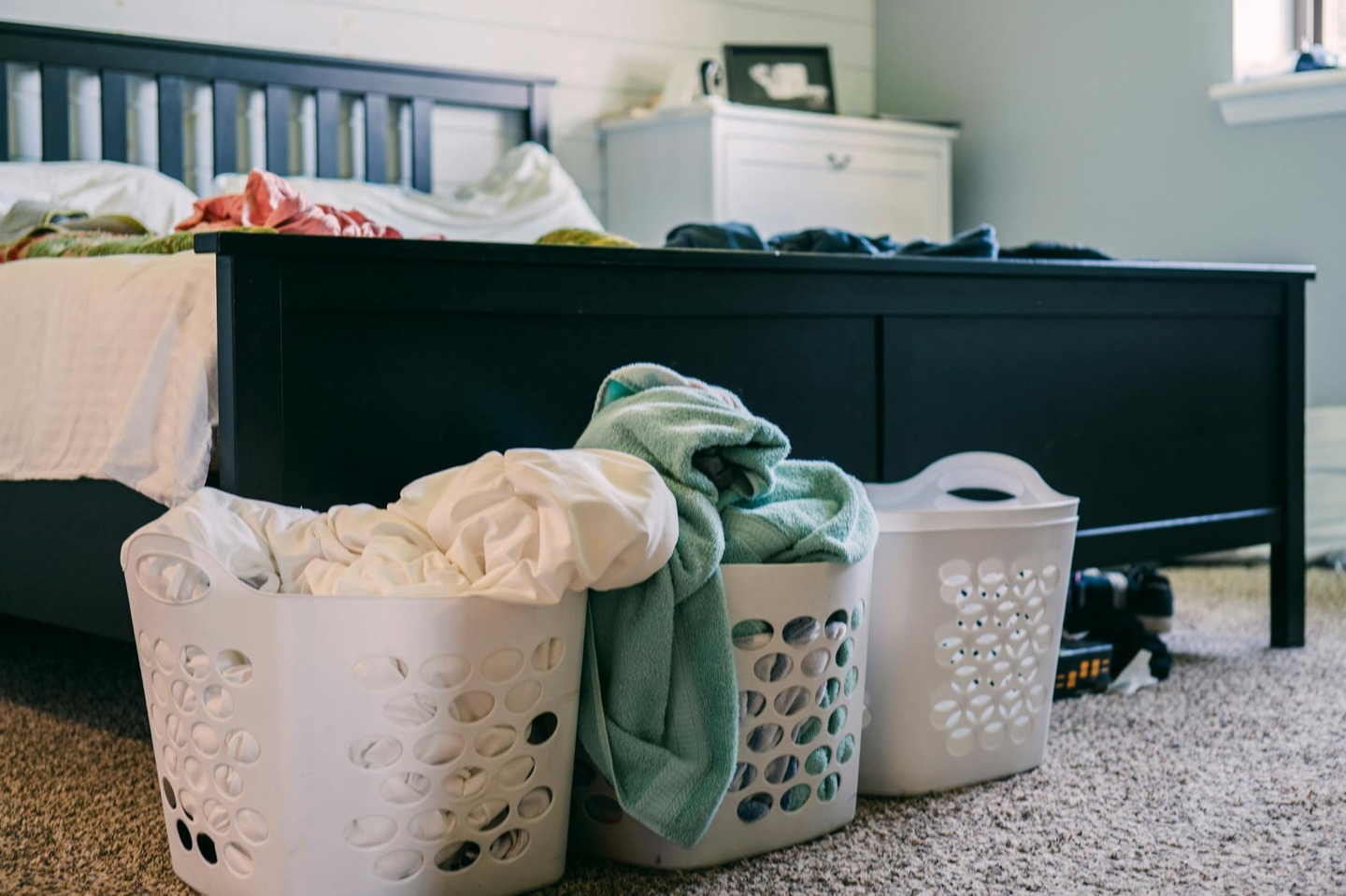 Before
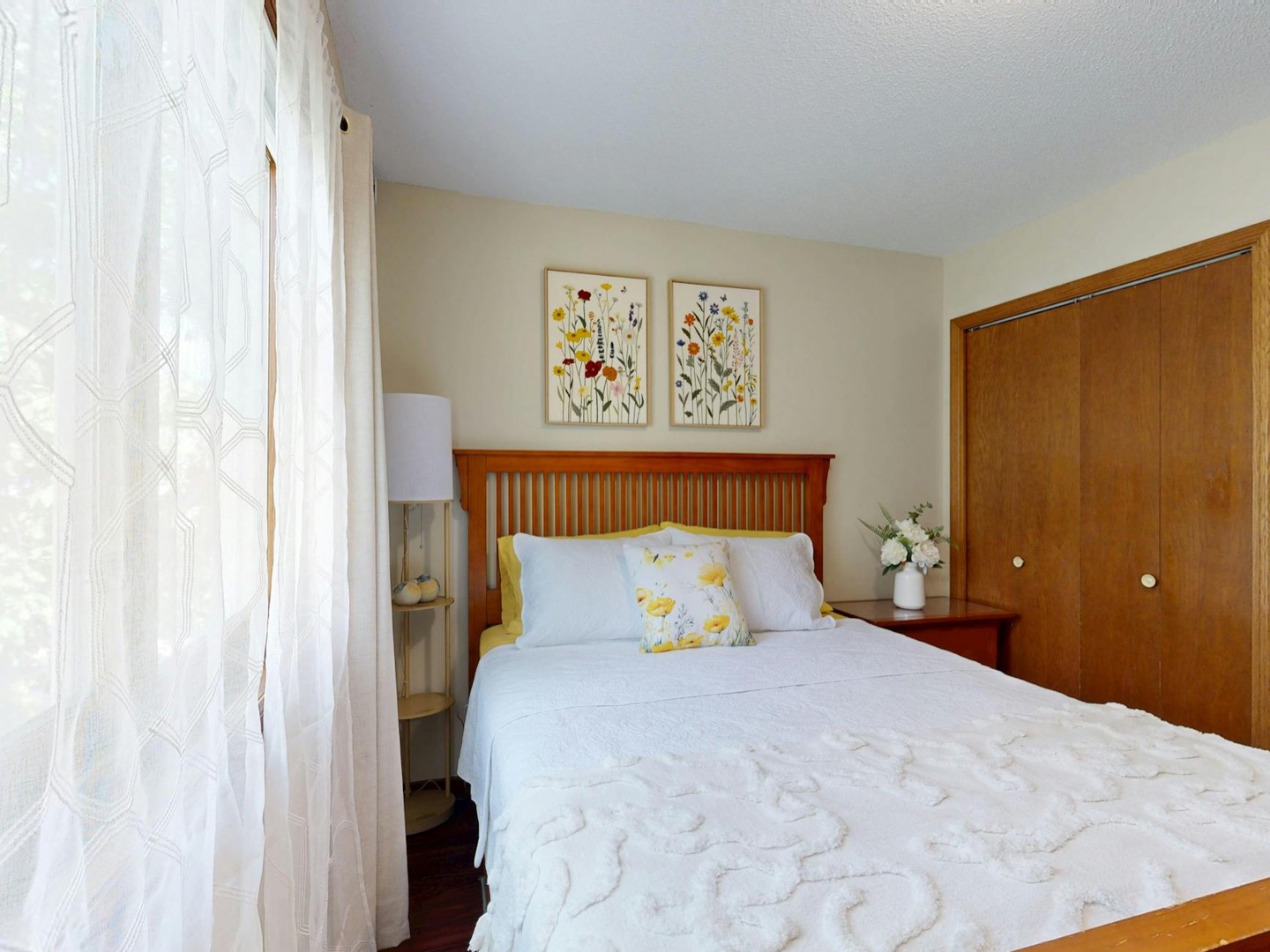 After
What a mood board is for (and what it can't do)
A mood board does one thing well: it forces you to commit to a direction. Before you have a board, every option is open and nothing is decided. After you have one, you know the wood is blonde, the walls are warm white, the textiles are wool and linen, and the metal is black, not brass. That coherence is genuinely valuable — a room where every choice agrees with every other choice reads as designed, and a room where they argue reads as accidental.
But a flat board can't tell you three things that decide whether the room actually works:
- Scale. The bed that looks balanced beside the rug on a collage might swallow your 9×11 room or float lost in a big one. Boards have no proportion.
- Light. Your room's light — its direction, its warmth, the hour it disappears — changes every color on the board. A chalky white reads crisp in one room and grey in another.
- The floor you already have. The board assumes a blank stage. Your honey-oak floor or your grey laminate is already casting a vote, and it will fight half the palettes that look fine in isolation.
So the board gets you to a direction, which is the easy 30%. The hard 70% — does this direction fit my actual room — is exactly where most hosts get surprised.
The two ways mood boards go wrong
The aspirational board. Every piece is beautiful and the whole thing is built for a room that isn't yours. You shop it faithfully and the result is technically the board and somehow not the feeling — because the feeling lived in the ceiling height and the window you don't have.
The mismatched board. Each item was chosen on its own merits, in its own browser tab, on its own day. Individually great. Together, slightly off — three different whites, two competing wood tones, a rug whose pattern fights the art. Nothing is wrong, but nothing agrees, and the camera catches the disagreement.
Both failures share a root cause: the board was never tested against the real room before the money was spent. Which points at the fix.
Build the board from your room, not from the internet
Here's the order that produces a board you can trust.
- Photograph the room first. Wide, from a corner, in daylight. This is your stage — the real proportions, the real floor, the real window. Everything goes on top of this, not a blank canvas.
- Settle the palette against your light. Before you fall for a wall color on a board, test it in the actual room. The free wall color preview shows you how a paint reads on your walls in your light — which decides half the board for you, since the wall color anchors the whole palette.
- See the finished room, then read the board off it. This is the inversion that makes the rest easy. Upload your photo to a design planner, preview the room redesigned in a style, and the "mood board" is no longer a guess — it's the actual finished room, with a shopping list of every piece in it. You're not assembling a board and hoping; you're reading one off a result you've already seen.
- Commit and shop. Because the pieces were shown working together in your space, the board is shoppable as-is. No mismatched whites, no scale surprises.
A board you can actually shop
When the board comes out of a previewed room instead of a collage, it arrives as a list — real pieces at real prices, every one already shown in the space.
Shopping list
- Blonde oak bed frame (queen)The anchor piece. Pale wood set the whole board's wood tone and kept the small room open.$169
- Warm white duvet + 2 shamsReads clean and hotel-fresh — the textile that makes the rest of the board look intentional.$72
- Chunky wool throw (oat)The single 'cozy' object. On a flat board it's optional; in the previewed room it's what warmed the corner.$44
- Two ceramic lamps, 2700K bulbsMatched pair, warm light. Symmetry is the cheapest way to make a board read as designed.$78
- Flat-weave wool rug, 5x7Chosen at the right scale because the preview showed exactly how much floor it needed to cover.$49
- Black-framed art pairThe board's one contrast accent — black, not brass, so the metals agree.$34
- Real plant in a clay potOne living thing to keep the palette from going flat. The preview made the empty corner obvious.$22
That list is the mood board — except every item has already been seen standing in your room, at the right scale, in your light. There's nothing left to hope about.
Mood boards for a redesign, not just a fresh start
If your listing is already furnished, you don't need to board the whole room — you need a board for the change. Preview the redesign, spot the two or three pieces doing the most work, and build a tiny board around those. That's the discipline behind a good Airbnb redesign: you're boarding the upgrade, not re-decorating from zero. For the bigger picture of which rooms deserve a board first, the short-term rental design guide lays out the priority order.
Skip the collage — see the finished room
A mood board is a way of asking "will this work?" The fastest, most honest answer is to see the room finished before you commit. Upload one photo, preview your actual space in a few directions, and let the board — and the shopping list — come out of the version that fits. One preview versus a board that looked great and shopped wrong: here's the pricing, and the first room is free.
Turn your room into a mood board you can shop
Upload one photo. See your room redesigned, with every piece shown in the space and a complete shopping list. First room is free.
Preview My Room — Free$29 per additional room · One-time · No subscription
FAQ
What's the best way to make an Airbnb furniture mood board? Build it from your actual room, not a blank canvas. Photograph the space, settle the wall color in your real light, then preview the room finished so the board is the result you've already seen — with a shopping list attached — rather than a collage you're hoping will cohere.
Can I see the mood board pieces in my actual room? Yes. A design planner previews your real room redesigned and returns the exact pieces shown, at real prices. That's the difference between a flat board and one you can trust — every item has been seen at the right scale in your light.
Why do my mood boards never look right in real life? Usually scale, light, or your existing floor. Flat boards ignore all three. Previewing the finished room before you buy catches the mismatches a collage can't show you.
Do I need design skills to make a board that works? No. If you start from a previewed room, the coherence is already there — every piece was chosen because it worked together in the space. You're picking the version you like, not engineering it from scratch.