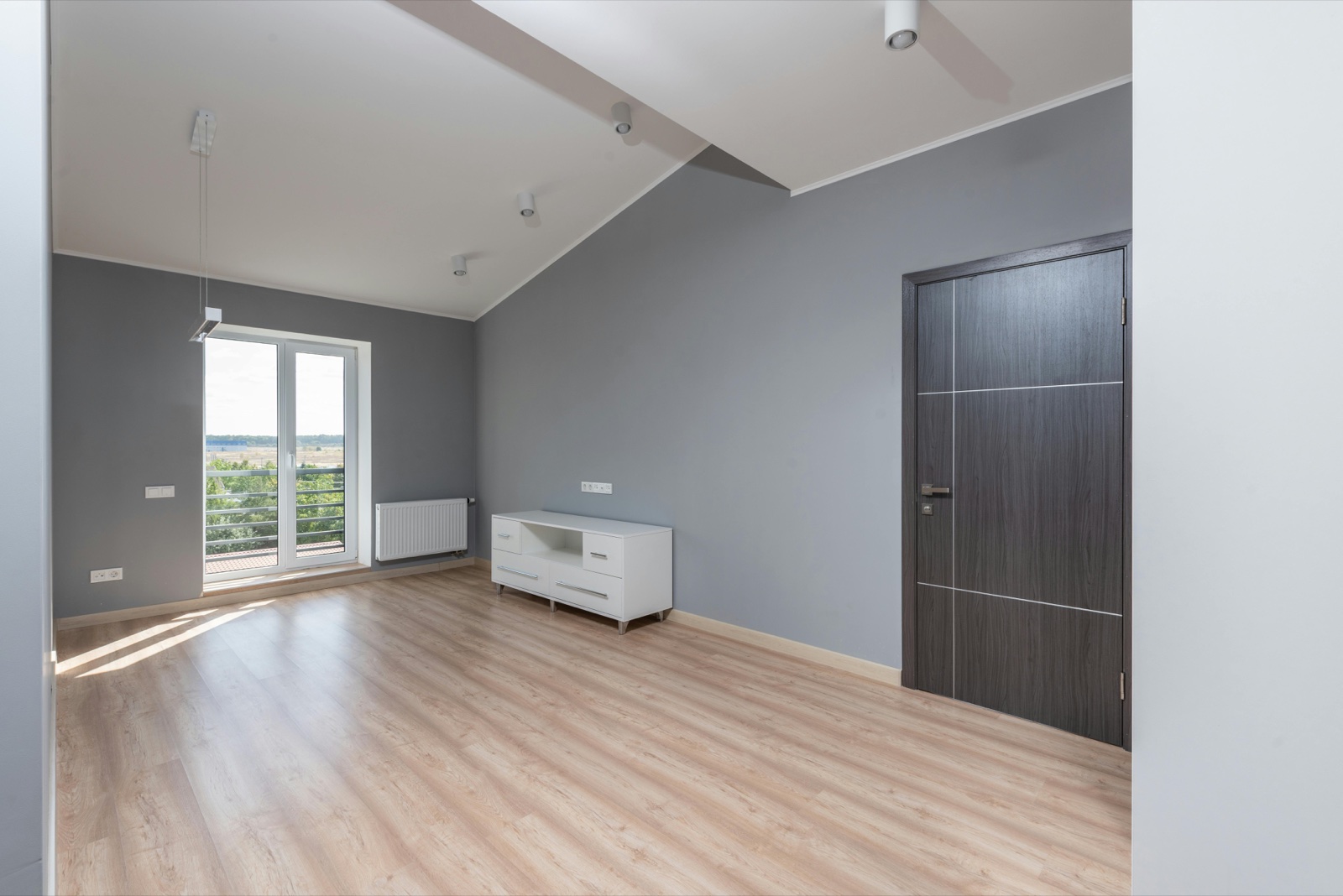
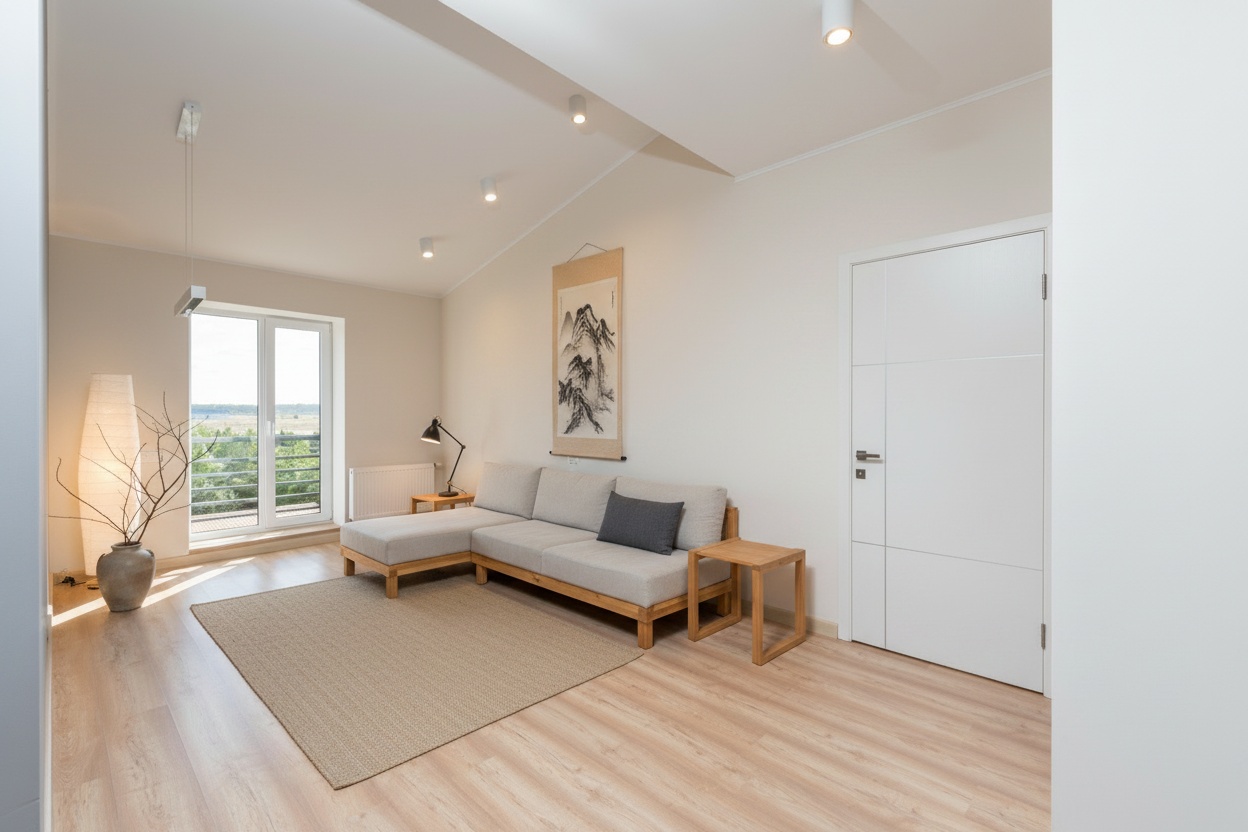
An empty room asks too much of a person looking at it. Standing in a bare bedroom, a buyer or a guest has to do the furnishing in their head — guess where the bed goes, whether a dresser fits beside the window, how warm the light feels at night. Most people can't, and they don't try. They scroll past. Staging the room — even virtually — does that imagining for them, and that's the difference between a photo that gets clicked and one that doesn't.
Why empty rooms are the hardest rooms to sell or rent
Empty rooms all share the same problem: they give buyers and guests nothing to picture. An empty bedroom is just four walls. Without furniture, it's impossible to judge whether a king bed fits, whether the room feels spacious or cramped, or whether the light is warm enough to sleep well in.
Studies consistently show that vacant listings sell and rent for less, and take longer:
- Vacant homes sell for 6–11% less than staged equivalents (National Association of Realtors).
- Virtually staged listings receive up to 75% more online views than bare-room photos (Real Estate Staging Association).
- On Airbnb, an unstaged bedroom — even in a great location — routinely underperforms photographed comparables.
Physical staging solves this but costs $1,000–$5,000+ per property. Virtual empty-room staging solves it for $29 — or free for your first room.
Virtual staging vs physical staging for empty rooms
| Physical staging | Restage (virtual) | |
|---|---|---|
| Cost | $1,000–$5,000+ per property | $0 first room · $29 after |
| Time to stage | Days to schedule, half-day to set up | 2 minutes |
| Furniture ownership | Rental fee or must own | Not needed |
| Multiple style options | What you own or can rent | Unlimited styles, 3 variants per room |
| Shopping list for purchase | No | Yes — every item with real prices |
| Can be used for listing photos | Yes | Yes (with disclosure) |
| Requires disclosure on MLS | No | Yes — "virtually staged" |
How to photograph an empty room for the best staging result
An empty room is actually easier to photograph well than a furnished one — there's nothing in the way. These guidelines produce the best result:
- Shoot in daylight. Open all the blinds, turn off the lamps, and shoot when the room has its best natural light. Daylight gives the most accurate color and shadow to work from.
- Wide angle from a corner. Stand in a corner, camera at waist height, and capture as much of the room as possible. The full floor, at least two walls, and ideally the ceiling line are what make furniture placement believable.
- Include all doorways and windows. Windows and doors are the constraints that decide where large furniture can and cannot go.
- Avoid fisheye distortion. Extreme wide-angle lenses and phone panorama modes bend proportions in a way that throws off placement. A standard wide angle (18–24mm equivalent) is ideal.
- Clean the floor. Clear boxes, dust, and debris. They can be worked around, but a clean floor produces a sharper, cleaner result. (Still cluttered? The furniture removal tool clears it first.)
Which empty rooms to virtually stage first
If you have a multi-room property and a limited budget, stage in this order:
- Living room / main open space. The hero shot. More clicking happens from the main room photo than any other. If you only stage one room, stage this one.
- Primary bedroom. The critical "where will I sleep?" question. An empty bedroom reads as smaller and less valuable than a staged one — even when the dimensions are identical.
- Dining area. Buyers and guests frequently wonder whether a space fits a dining table. An empty dining area raises doubt. A staged one settles it.
- Home office or flex space. Any room with an ambiguous use benefits most from staging — showing the room as a specific, useful space removes uncertainty.
For a full guide to which rooms drive the most bookings and sales, see the short-term rental design overview, the virtual staging guide for real estate agents, or the Airbnb interior design walkthrough. New to the workflow? Start with how it works.
Empty room staging styles: what works for Airbnb
The goal of an STR empty-room staging is the same as any other staging: make the room look like the most bookable version of itself in a thumbnail. The styles that perform best across most markets:
- Scandinavian — blonde wood, white walls, warm textiles. Clean, aspirational, broadly appealing. The highest-performing single style across STR markets globally.
- Japandi — darker woods, deliberate simplicity, quiet warmth. Strong in urban and design-forward markets. Reads as premium without being maximalist.
- Modern Coastal — sand, driftwood, sea-glass textures. Matches the setting in beach and lake markets rather than working against it.
- Warm Minimal — limewash tones, natural oak, generous negative space. Performs well in mountain, suburban, and high-end residential markets.
Each Restage style produces three photoreal variants of the staged room — so you can compare interpretations before deciding which to use for listing photos. The Airbnb design planner explains how to use those variants as a renovation and purchasing blueprint.
What you get with every free staging
Each free empty-room staging result includes:
- 3 photoreal staged room variants in your chosen style
- Complete furniture shopping list — every item visible in the staged room, with product links and prices
- Paint color recommendations — the wall and trim colors used in the design
- Lighting plan — what fixtures and bulb temperatures the style calls for
The staged photos are your listing images. The shopping list is your furniture buying guide. The paint and lighting recommendations are your renovation brief. One upload, everything you need to furnish and photograph the room. If you'd rather refresh a room that's already furnished, see the Airbnb redesign guide; if the walls need work first, test a color with the free wall color preview. See pricing for what's included after the first free room, or browse the design and staging blog.