The mattress is the one piece of furniture every single guest uses for hours. It never appears in your listing photos, yet it shows up in your reviews more than almost anything else. "Bed was so comfortable" is one of the most common phrases in five-star reviews. "Mattress was hard as a rock" or "woke up with a sore back" are among the most damaging comments a listing can get.
Most hosts end up choosing between two types: all-foam (usually memory foam) and hybrid (coils plus foam). Both can work. The right choice depends on your guests, your climate, your budget, and how the mattress gets into the property.
The verdict: For a primary bedroom in most rentals, a medium-firm hybrid is the best all-round choice: it sleeps cooler, supports a wider range of body types, has better edge support for couples, and holds up well. Choose memory foam for secondary bedrooms, bunk rooms, hard-to-access properties, and tighter budgets. Whatever you choose, aim for medium-firm, the firmness that suits the widest range of guests.
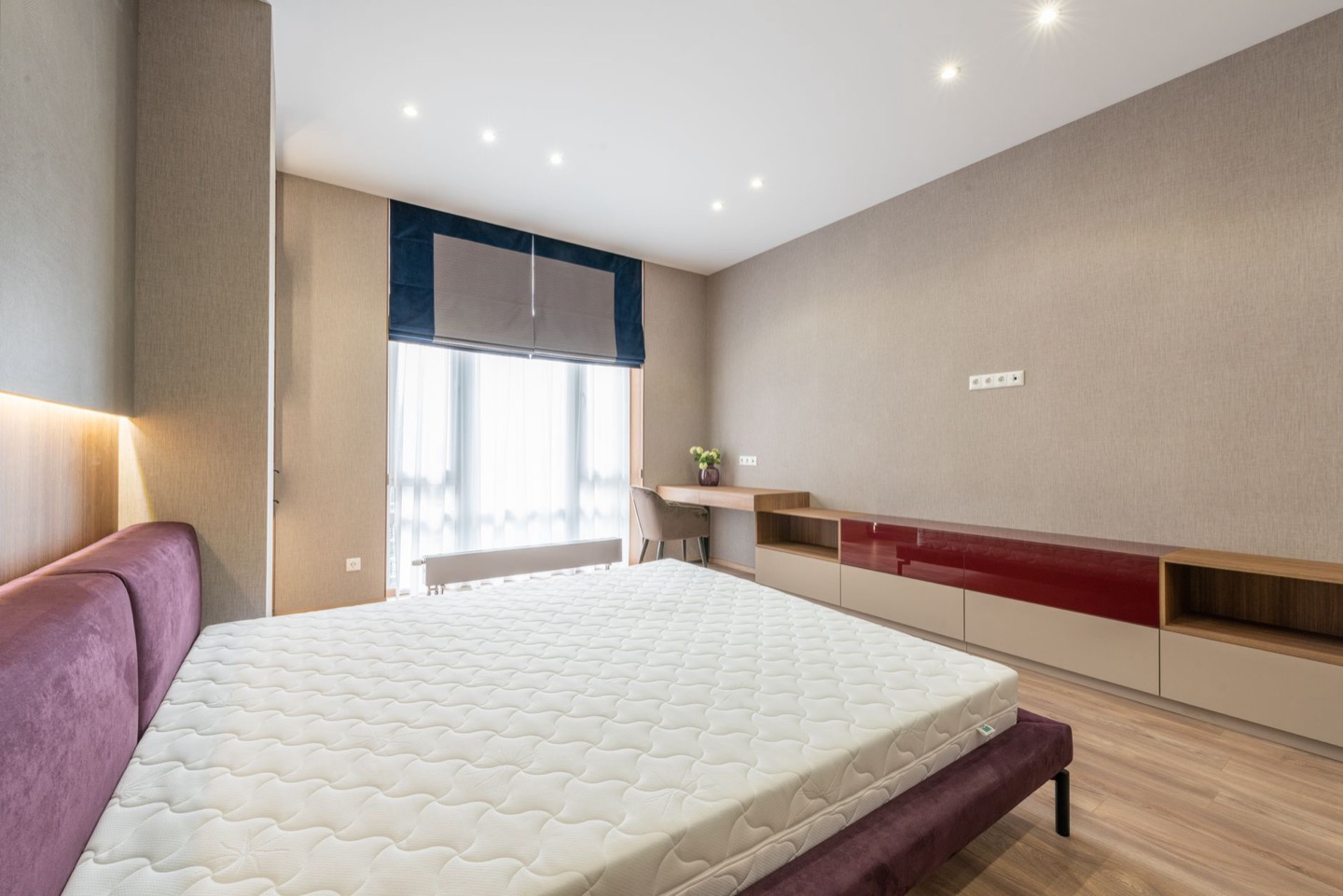 Before
 After
Side by side
| Memory foam | Hybrid | |
|---|---|---|
| Construction | Layers of foam | Pocketed coils with foam comfort layers |
| Feel | Body-hugging, "sinks in" | Bouncier, more "on top of" the bed |
| Temperature | Can sleep warm | Sleeps cooler; coils allow airflow |
| Edge support | Weaker; edges compress | Stronger; easier to sit on the edge |
| Motion isolation | Excellent | Good |
| Suits | Side sleepers, lighter guests | Back and stomach sleepers, heavier guests, couples |
| Weight | Lighter; easier to move | Heavy; harder up stairs |
| Typical queen price | About $400–$1,000 | About $700–$1,600 |
| Lifespan | About 6–8 years | About 7–10 years |
Prices and lifespans vary by brand and quality. A cheap mattress of either type will wear out faster under rental use.
The problem with choosing for yourself
At home, you buy a mattress that suits your body and sleeping position. In a rental, you're buying for hundreds of different people: side sleepers, stomach sleepers, couples, guests with back pain, petite guests, heavier guests, kids, and grandparents.
That's why the goal is a mattress that's comfortable for as many people as possible, not one that's perfect for any single person. In practice, that means:
- Medium-firm firmness. Soft mattresses fail heavier guests and back sleepers. Very firm mattresses fail side sleepers and lighter guests. Medium-firm is the compromise most guests rate well.
- Good support across the whole surface, including the edges, where couples sleep and guests sit to put on shoes.
- Neutral temperature, because guests can't swap your mattress for a cooler one at 2 a.m.
Memory foam: strengths and weaknesses
Strengths:
- Pressure relief. Foam contours to the body, which side sleepers often love.
- Motion isolation. Couples don't feel each other moving.
- Lower price. Many good foam mattresses cost less than comparable hybrids.
- Easy to deliver. Most ship compressed in a box and can be carried up narrow stairs or into a remote cabin by one or two people.
Weaknesses:
- Heat. Traditional memory foam traps body heat. Many newer foams use gel or open-cell designs to reduce this, but it's still the most common complaint.
- Weak edges. Sitting on the edge compresses it, and couples can feel like they're rolling off.
- The "stuck" feeling. Some guests dislike sinking in and find it hard to change position.
- Can soften faster. Lower-density foams develop body impressions under heavy use.
Hybrid: strengths and weaknesses
Strengths:
- Cooler sleep. Coils let air move through the mattress.
- Better support for more body types. Coils push back, so heavier guests and back sleepers stay supported.
- Strong edges. Reinforced perimeter coils make the full surface usable.
- Familiar feel. Many guests are used to a spring mattress and find a hybrid feels "normal."
- Durability. Quality hybrids often hold their shape longer under heavy use.
Weaknesses:
- Cost. Typically more expensive than foam.
- Weight. Hybrids are heavy. Getting one up a spiral staircase or into a loft can be hard, even if it ships in a box.
- Some motion transfer. Usually minor with pocketed coils.
Which mattress for which room
Primary bedroom: medium-firm hybrid. This is the bed that drives your reviews, usually occupied by couples paying the most.
Secondary bedrooms: quality memory foam or hybrid depending on budget. Guests in secondary rooms are often kids, friends, or family members who are more forgiving.
Bunk rooms and kids' rooms: memory foam. Lighter, easier to fit onto bunk frames, and kids rarely notice the difference. Check the bunk bed's maximum mattress thickness for safety.
Sofa beds and daybeds: use the manufacturer's matched mattress and add a memory-foam topper. Our sleeper sofa vs futon guide covers these.
Hot climates and rentals without strong AC: hybrid, or foam with cooling features.
Remote cabins and walk-up apartments: memory foam in a box is much easier to get in. Measure stairways and doorways before ordering a hybrid.
Mattress size and the room
Mattress choice goes hand in hand with bed size. A king hybrid is heavy and expensive; a queen foam mattress in a secondary room is easy. If you're still deciding between sizes, start with our king vs queen bed guide.
Protecting your investment
A mattress in a rental has a harder life than one at home. Protect it:
- Waterproof mattress protector on every bed, washed every stay or at least every few stays. It's the single most important accessory you'll buy. Choose one that's breathable so it doesn't make the bed sleep hot.
- Pillow protectors under every pillowcase.
- Rotate the mattress every three to six months (head to foot) to even out wear.
- Use a proper foundation. Many warranties require a supportive base. Slats too far apart can damage foam and void the warranty.
- Keep the receipt and law tag. Warranty claims often require them.
Bedding sits on top of all this. Our white vs colored bedding guide covers sheets and duvets.
The cost per night
A mattress feels expensive until you divide it by nights used. A $1,200 hybrid used for seven years in a rental booked 200 nights a year costs well under $1 a night. A cheaper $500 foam mattress that wears out in four years costs about 60 cents a night but carries more risk of comfort complaints.
Either way, the mattress is one of the cheapest things to get right on a per-night basis, and one of the most expensive to get wrong in reviews.
Toppers: a smart second layer
A mattress topper gives you flexibility:
- Too firm? A 2–3 inch soft foam or fiber topper makes a firm hybrid friendlier for side sleepers.
- Aging mattress? A topper can buy a year or two before replacement, though it won't fix sagging.
- Hot sleepers? Some toppers are designed to cool.
Keep a spare topper in the owner's closet. If a guest finds the bed too firm, your cleaner can add it for the next stay.
Shopping list
- Medium-firm hybrid mattress, queenCooler sleep, strong edges, and broad support for the primary bedroom.$1,100
- Breathable waterproof mattress protector, queen (x2)One on the bed, one in the wash. Protects the warranty and the mattress.$80
- Supportive platform foundation or slatted baseCorrect support extends mattress life and keeps the warranty valid.$200
- 3-inch foam topper (spare, stored on-site)Softens the bed for guests who find it too firm.$90
- Medium-fill pillows (4) + pillow protectorsMedium pillows suit the most sleeping positions.$110
Trial periods and warranties
Most boxed mattress brands offer trial periods and multi-year warranties, but terms vary. Read them before you buy: some warranties exclude commercial use, and some require a specific foundation. Keep proof of purchase on file.
When to replace
Replace a rental mattress when:
- Guests mention the bed in reviews or messages, even once.
- You can see body impressions or sagging when the bed is stripped.
- The edges collapse when you sit down.
- The protector has failed and the mattress is stained.
Waiting too long is a common mistake. A tired mattress quietly costs reviews long before it looks worn out.
Quick decision checklist
- Primary bedroom, couples, premium rate? → Medium-firm hybrid
- Hot climate or weak AC? → Hybrid or cooling foam
- Narrow stairs or remote access? → Memory foam in a box
- Bunk room or kids' room? → Memory foam
- Tight budget, secondary room? → Quality memory foam
Plan the whole bed
The mattress is half the story; the bed guests see is the other half. A great mattress with tired bedding still looks uncomfortable in photos. Our guide to making an Airbnb look luxurious for under $500 covers the visible side. To see your bedroom restyled with new bedding, headboard, and layout before you buy, restyle your room.
Make the bed look as good as it sleeps
Upload a photo of your bedroom. Preview it restyled with bedding, headboard, and furniture, plus a shopping list. First room is free.
Restyle My Room$29 per additional room · One-time · No subscription
FAQ
What firmness is best for an Airbnb mattress? Medium-firm. It suits the widest range of body types and sleeping positions.
Is memory foam bad for a rental? No. A quality memory-foam mattress works well, especially in secondary rooms and bunk rooms. Its main drawbacks are heat and weaker edges.
Are hybrid mattresses worth the extra cost? In the primary bedroom, usually yes. They sleep cooler, support more body types, and often last longer.
How often should I replace a rental mattress? Often every 6–10 years depending on quality and occupancy, and sooner if guests mention discomfort or you see sagging.
Should I buy a mattress-in-a-box for my Airbnb? Boxed mattresses, both foam and hybrid, are popular for rentals because they're easy to deliver. Check the trial period and warranty terms.